March 2026
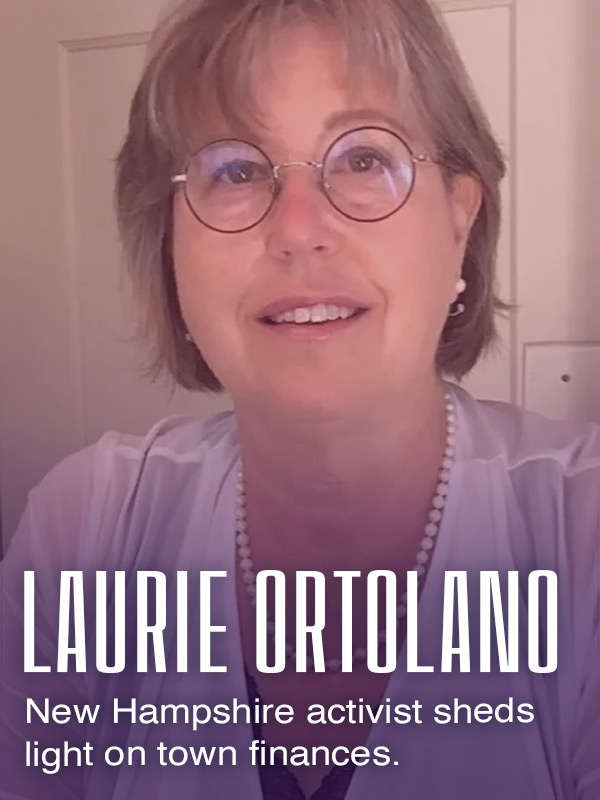
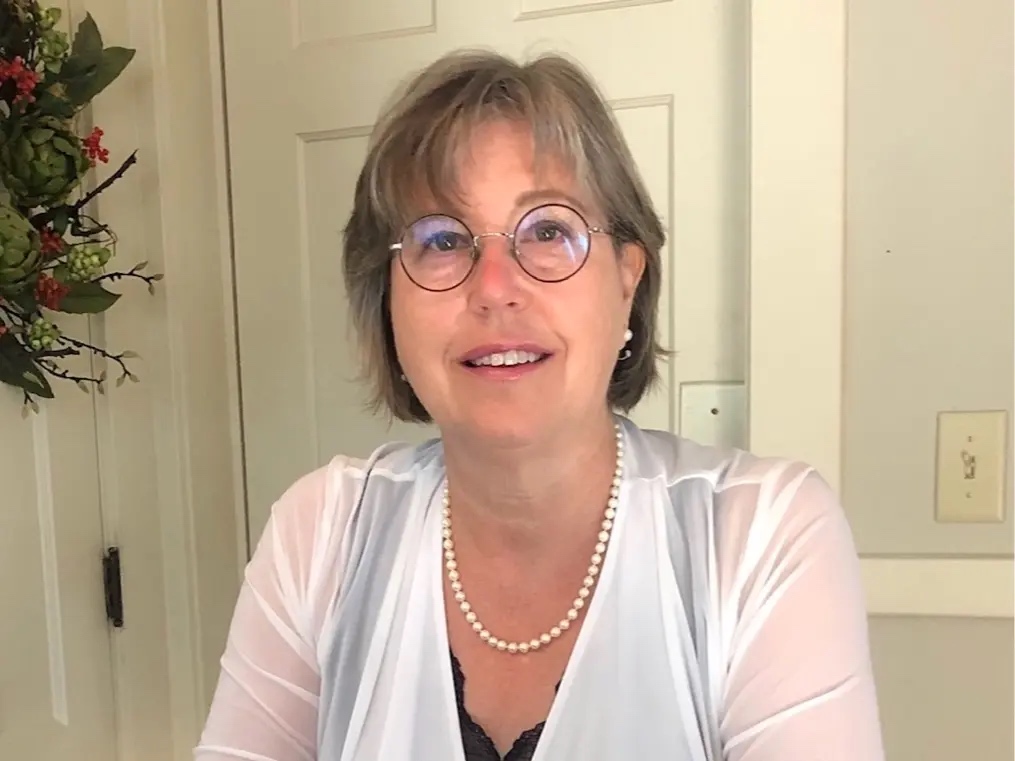
Our Right to Know: Laurie Ortolano
New Hampshire activist sheds light on town finances.
By Savannah Rude
“It all started with a bad property tax assessment,” Laurie Ortolano said when she recalled what led her to start looking into public records.
Ortolano, a 64-year-old retired analytical engineer who lives in Nashua, New Hampshire, with her husband, said she never expected to be doing what she does now.
When she and her husband moved to her husband’s hometown of Nashua in 2014 and bought a property, their tax assessment went up 50%, while none of their neighbors’ did, she said.
“So, we questioned it,” Ortolano said. “They did a new update with numbers, and we had serious reservations about our property being fairly assessed.”
With an engineering background, Ortolano reviewed the data she had requested and found many inconsistencies. Her biggest realization was that the mayor’s assessment was improperly done.
“I discovered that the mayor had done a property improvement, pulled a permit for about $100,000, and his assessment hadn’t changed at all,” Ortolano said. “The permit has not been captured properly per the rules of assessing a permit.”
Unknown to Ortolano at the time was that the mayor lived only a couple of blocks away from her.
Ortolano said that when she tried to address it with him privately, it didn’t go well. So, she took matters into her own hands and addressed it in a public board meeting. She said he then accused her of slander.
“I pretty much believe that because of that situation, the city then dug in and they wouldn’t fix our property,” Ortolano said. “I had to go to a full appeal before an appeals board on land.”
Ortolano said it took almost three years for her tax assessment to be corrected.
While she was fighting her own tax assessment case, she filed three right-to-know lawsuits, and in 2021, she helped other property owners file abatements.
Ortolano said that it has been extremely difficult to obtain records in her city.
“They have closed down records and City Hall, like it’s Fort Knox,” Ortolano said. “They put up stanchions in hallways that used to be public and offices that are called reporting and records offices are now closed to the public.”
She dove into another right-to-know case involving the construction of a performing arts center in downtown Nashua, Ortolano said. “The city took federal money to fund part of the construction project, a very small amount, and taxpayers bonded the rest of it.”
When Ortolano requested records about the construction project, she was told none were publicly available, so she again went to court.
“The city piled five attorneys against one pro se lady,” Ortolano said. “I knew I had kicked a hornet’s nest and didn’t even know the significance when I brought it in.”
Ortolano said the construction project involved $35 million of taxpayer-funded, bonded and government money and that $70 million of trust fund money was not accounted for properly.
To date, the case is still ongoing, and she said the city has invested more than a million dollars trying to beat her. Federal agents took the case a year ago as well.
“I’m not complaining about the amount of dog poop on the sidewalk, I’m looking at some pretty big picture things that involve a lot of public money,” Ortolano said. “I think they’re pushing back hard because the city didn’t have good policies, practices, accounting and audit systems to address these issues and I think the city deliberately wanted to hide a lot of this.”
Ortolano’s efforts to hold her government accountable earned her the 2025 New England First Amendment Foundation citizenship award. She said that this experience has led her to appreciate her First Amendment rights much more.
“Sadly, at my age, mid-60s, I really didn’t respect my own rights, and I didn’t fully understand them,” Ortolano said. “I think a lot of us take them for granted and we assume they’re there until they’re taken from you.”
Ortolano said she often fears telling others to use FOI laws in their state because she was publicly criticized for holding their government accountable.
“I think collectively we all have to be more supportive of each other when we come out for records,” Ortolano said. “We have to establish a reasonableness among ourselves and our community to respect what people come forward with.”