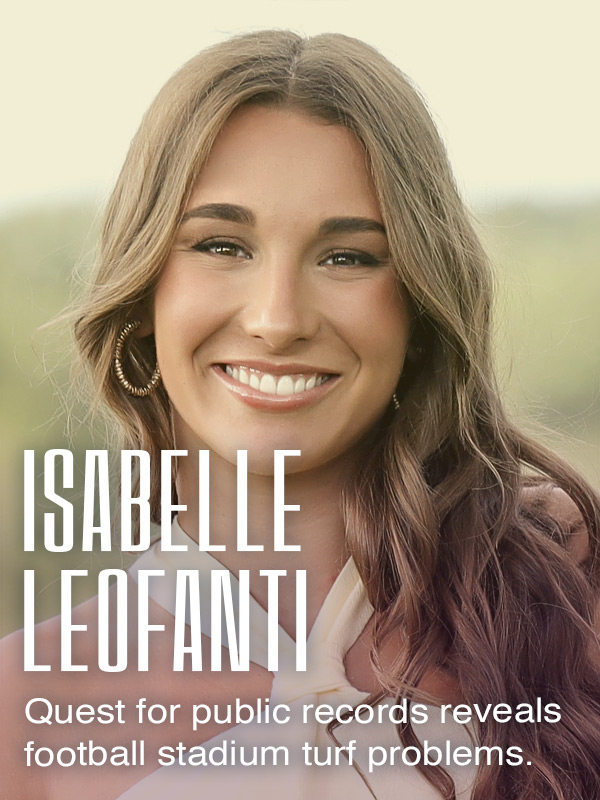
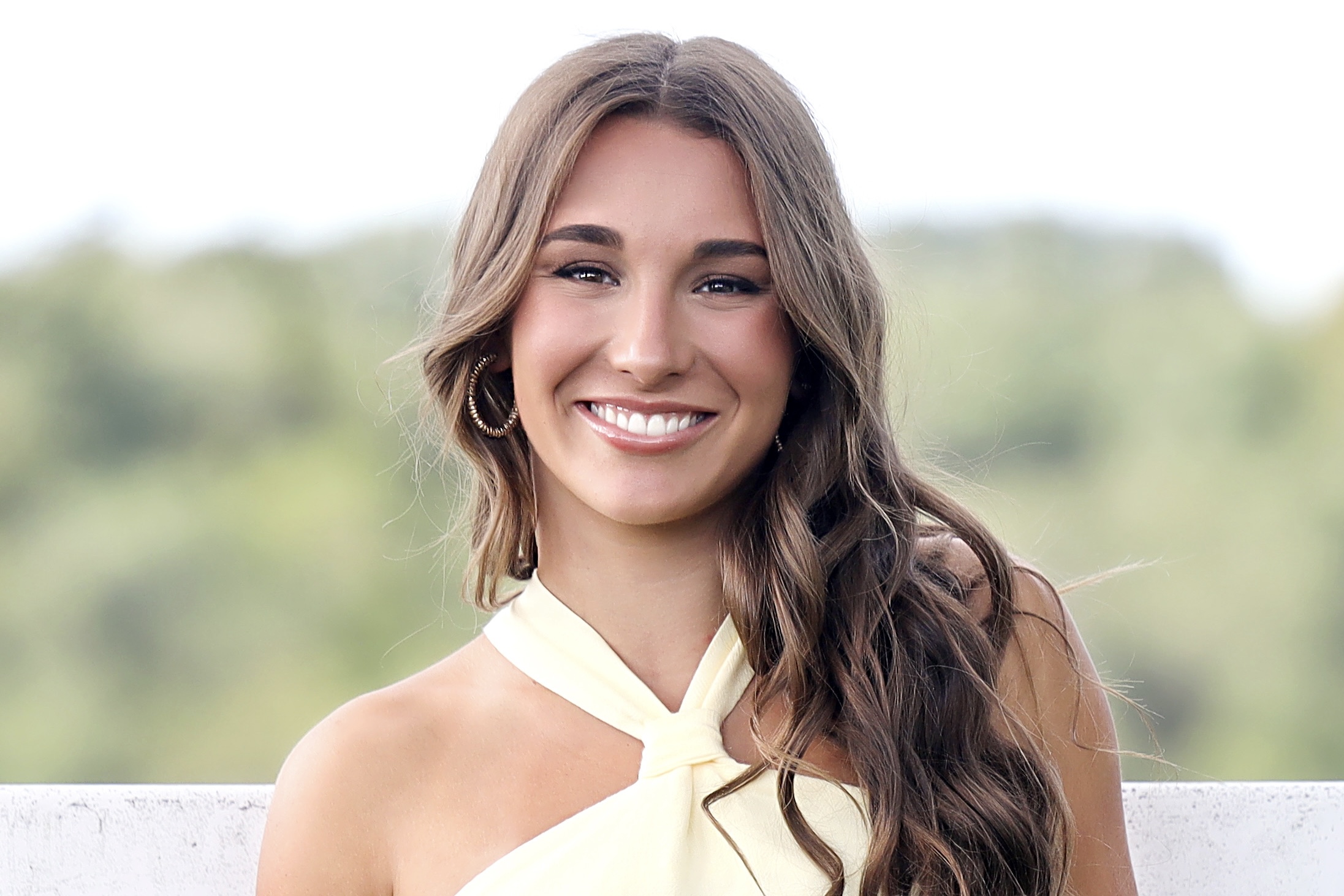
Our Right to Know: Isabelle Leofanti
Quest for public records reveals high school football stadium turf problems.
By Savannah Rude
When Isabelle Leofanti watched two football players tear their ACLs while playing less than a week apart, she began to question the safety of her high school’s field turf.
Leofanti, an 18-year-old from Naperville, Illinois, played soccer on the same turf throughout high school. She said that while there had been other injuries on the field, it was viewing those two that spiked her concern.
“Watching that made me realize there is a really big issue, and seeing it while playing on that field as a soccer player,” Leofanti said. “Seeing all these different things coming together, and it was just like, this is a problem that needs to be addressed and spoken about.”
Leofanti wrote for her school newspaper at the time, so she started digging. She said her first step was to do background research and see what information was already available to her. After reaching out to several people for interviews, she was met with no response.
“I started seeing a bigger issue when I wasn’t getting any responses from these higher-up people in the district because they normally will respond,” Leofanti said. “I think that I was following up with some of these district officials every couple of days, maybe every three days, before even just receiving a response.”
She was able to finally secure an interview with the district-level executive director of communication services, but only after consistently reaching out for two weeks, she said.
“When I had the interview with the first district individual, a lot of the questions I asked, I was told that they couldn’t answer or they didn’t know, and I thought that was definitely a big issue,” Leofanti said. “I saw there was something wrong, and something I wasn’t getting out of what I was trying to do with just a basic interview. That’s when I realized I need to submit a FOIA request.”
Leofanti leaned on her teachers to figure out which records to request and how to request them, since no one at her school had ever used FOIA, she said. Her first records request was for emails from the Indian Prairie School District. Leofanti used very specific keywords in her request.
“I really kind of narrowed down to like keywords with turf, field, installation, and maintenance or funding,” Leofanti said. “So, everything that I got back was all under those words and those conversations that the district was having that I couldn’t see or I wasn’t hearing about.”
One set of records that Leofanti revealed included censored information about the replacement of the school’s turf field.
“There was a referendum trying to get passed within the school board and there was one question. It was, ‘Where are we at with possibly getting artificial turf at Wabonsee Valley and Equa Valley, and replacing the turf at Natea Valley?’ And they left that blank,” Leofanti said. “I thought that was honestly probably the biggest thing that stood out to me.”
Leofanti said that, aside from some unanswered questions, she was able to obtain almost all the information she needed through her FOIA request, which she attributes to the way she submitted it.
“I went through a couple rounds of writing about how I was going to request this record or how I was going to request what I got back through the FOIA,” Leofanti said. “So, I guess that was a big part of how I got so much information back was making sure that my request originally was really well written and got to the point and very specific.”
The records revealed that the turf field had not been replaced in 16 years, which is unacceptable, Leofanti said.
“This showed a like a difference between what was right and what was wrong, and that was something for me that was really big,” Leofanti said. “I wanted to make sure that I addressed that, especially being a senior and going through the last four years of playing on that field and also seeing so many people going through that and then also hearing different stories about different people getting injured.”
Once published, Leofanti said the story had a huge impact not just on her school but on the entire community.
“I think submitting the FOIA request and also publishing the article with all this information really shined a light on what one person can do and the impact it can have on so many athletes and so many individuals and their safety as well,” Leofanti said.
The story made some district officials displeased because the information they were hiding came to light, Leofanti said. But the story held them accountable and has led to actual changes, she said. Her work earned her a student FOI award given by the Student Press Law Center and Brechner FOI Project.
She hopes that it inspires other student journalists to utilize FOIA in their reporting.
“I just hope people do take advantage of it,” Leofanti said. “If they are in a journalism class and they’re writing for the paper and they’re writing a story but not getting a lot of information back, knowing that you have that right to do so and that it is possible to go and just submit one and see what you get out of it because at the end of the day you’re not doing anything wrong you have the right to do so.”
Leofanti is currently studying Business at Kent State in Ohio. She plays soccer for them and is looking at adding a second major: Journalism. She said the response to this article has led her to consider a double major.
“My experience working as a student journalist and on this article, I just, I found out how crucial my reporting and actions I took for transparency were, I had on my school and like my community, and it was something that reached a lot of people,” Leofanti said. “It’s something that’s wanting like inspired me to keep going with the journalism career path.”