Our Right to Know: Li Khan & The Citizen

By Eleni Economides Gastis

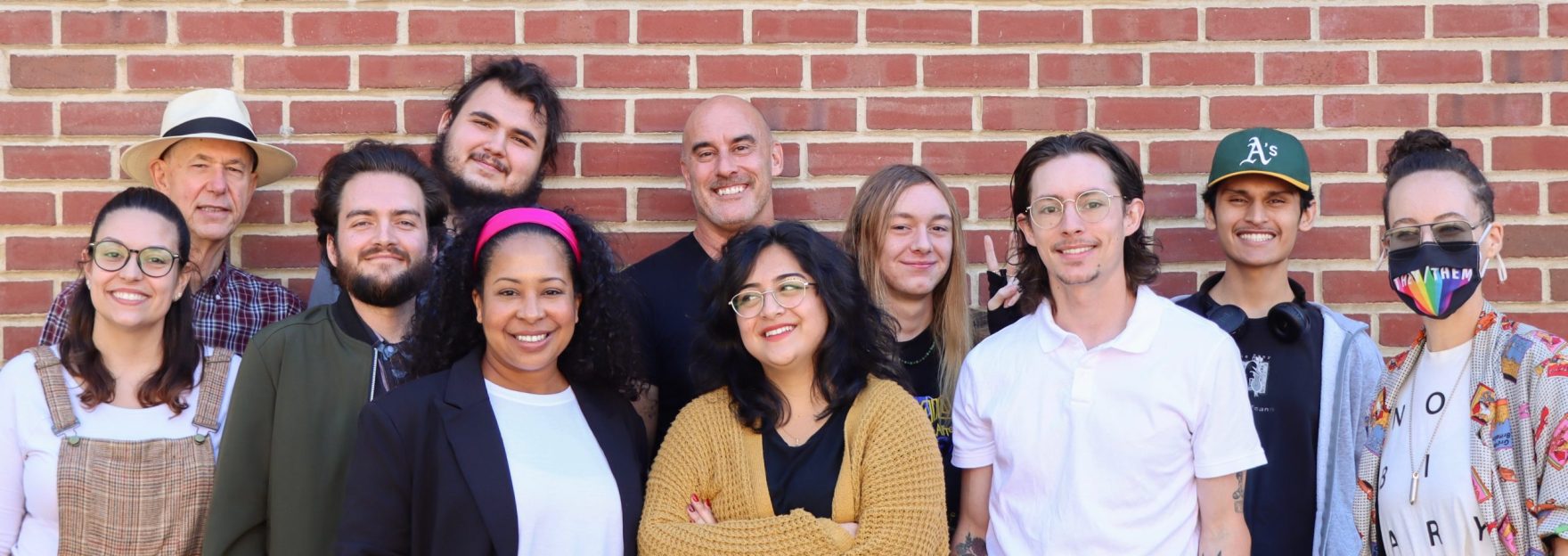
Peralta Community College District’s student-run publication – Laney College’s The Citizen in Oakland, California – is no stranger to shining a light on issues that impact the community.

The Citizen serves the four-college district with an emphasis on investigative reporting. Using resources that include public records requests or the publication’s industry-standard encrypted leak portal, students have uncovered important stories by:

In January 2023, filing a public records lawsuit against the district for outstanding public records they had sought for up to two years. After receiving outstanding public records, students from The Citizen settled with the district in October 2023.

The Citizen, under the leadership of Editor-in-Chief Li Khan, her predecessor Shiloh Johnston and current Managing Editor Lylah Schmedel-Permanna, has kept a watchful eye on the taxpayer-funded district, which has a budget in the hundreds of millions of dollars.

“We’re not afraid to shine a light on the information that our community deserves,” Khan said.

Student Press Law Center
Laney College’s The Citizen wins 2023 Student Freedom of Information Award

San Francisco Chronicle
Bay area college paper wins national journalism award for dogged exposes

The Northern California Chapter Society of Professional Journalists cites The Citizen in November 2022 in its Excellence in Journalism Awards

Our Right to Know: Wendi C. Thomas

By Diana Mitsu Klos 

An acclaimed investigative reporter and editor, the pursuit of public records is second nature to Wendi C. Thomas, founder of  MLK50: Justice Through Journalism

The nonprofit newsroom she founded in 2017 focuses on poverty, power and public policy in Memphis. Two-thirds of the city’s population is Black and 1 in 4 lives below the poverty line. There is a long history of distrust concerning law enforcement. Thomas’s work in Memphis includes 11 years with The Commercial Appeal as an assistant managing editor and metro columnist.

On Aug. 20, 2018, the first day of a federal police surveillance trial, Thomas discovered that the Memphis Police Department (MPD) was spying on her. The ACLU of Tennessee had sued the MPD, alleging it was in violation of a 1978 consent decree barring surveillance of residents for political purposes.

A judge ruled against the city, and Thomas says she never got a clear answer on why the MPD was monitoring her. Law enforcement also was keeping tabs on three other journalists whose names came out during the trial. A police sergeant testified that he used the fake account to monitor protest activity and follow current events connected to Black Lives Matter.

Thomas wrote in a 2020 ProPublica story, “My sin, as best I can figure, was having good sources who were local organizers and activists, including some of the original plaintiffs in the ACLU’s lawsuit against the city.”

Two days after the police sergeant’s testimony, Thomas filed a public records request with the city, asking for all joint intelligence briefings, emails or other documents that referenced her or any of the three other journalists that the MPD was following on social media.

It took 433 days to get the records, and Thomas still does not see what would make the police see her as a threat worthy of surveillance in the name of public safety.

“It’s scary to know the police were watching you, but what’s even more terrifying is the prospect of the government acting in secret,” she said.

ProPublica in partnership with MLK50: Justice Through Journalism
The Police Have Been Spying on Black Reporters and Activists for Years. I Know Because I’m One of Them.

MLK50: Justice Through Journalism
Wendi C. Thomas bio

Our Right to Know: Delilah Brumer

In March 2023, I was the editor-in-chief of The Pearl Post, the student newspaper of Daniel Pearl Magnet High School in Lake Balboa, California. Online Editor-in-Chief Alan Ruiz and I published an article headlined “Six water fountains shut off due to high lead levels.” Our reporting, which involved a California Public Records Act request, led our school district to change its water safety standards.

The article was spurred by a tip that the reason several of our school water fountains had been shut off for weeks was because they tested for dangerous levels of lead—and that the Los Angeles Unified School District administration didn’t want anyone to know.

When we received the tip, we immediately started doing research. As we worked to find information about lead in our school’s water, we found a page on LAUSD’s website claiming the district had a public database of lead testing information. However, when we clicked on the database, the link was broken. We then emailed our  district’s public information officer, hoping he could direct us to an updated link or find out if the link would be fixed. Instead, he told us that he could not provide any information.

We filed a California Public Records Act request immediately after that response and kept researching. We also conducted interviews with students, many of whom rely on water fountains throughout the school day. At a Title I public high school with a majority-minority enrollment, these shut offs were clearly having significant effects.

While we waited on a response to our CPRA request, we attempted to interview school and district officials. All of them, including our principal, ignored or declined interview requests. We also found a 2017 California law requiring school districts to notify parents about lead found in school drinking water at a rate of 15 parts per billion or higher.

We began to write our article, while still waiting on a response to our CPRA request. In early March, we received the information we had asked for — 66 pages of lead testing data from across the district. The data showed that at our school, several of the water fountains had lead levels significantly above the 15 parts per billion threshold. One even tested for lead at 65.3 parts per billion.

We also found, through our CPRA request, that since 2018, more than 500 water fountains across the school district have tested for lead at a rate of 15 parts per billion or higher.

Shortly after receiving the records, we published our article. We are proud that our work did exactly what student reporting should do: hold those in power accountable and increase our community’s awareness of school issues. We couldn’t have done this without the state and federal open government laws that protect the public’s right to access information.

The Pearl Post, 3/20/2023
Six water fountains shut off due to high lead levels

The Pearl Post, 10/4/2023
Lead-contaminated water fountains still closed after almost 10 months

2023 Society of Environmental Journalists, Nina Mason Pulliam Award for Outstanding Environmental Reporting, Third Honorable Mention.

Judges’ comments: “What an impressive investigative story by high school journalists who dealt with many school officials attempting to avoid disclosing the high lead levels in many Los Angeles school water fountains. These students deserve this honorable mention for refusing to give up. They persevered and wrote a story that had a deep impact on their audience. They exhibited the tenacity of professional journalists. It wasn’t lost on these judges that these journalists attend a school named for noted journalist Daniel Pearl.”